
Quick answer: Exterior paint typically peels because of moisture trapped behind the surface, poor surface preparation before the original paint job, using a low-quality paint or the wrong type for the substrate, or applying paint over an already-failing previous coat. The long-term fix always starts with proper scraping, sanding, and priming of bare wood before any new coat goes on. Skipping this preparation step is the single most common reason a repaint fails within a year or two.
Introduction
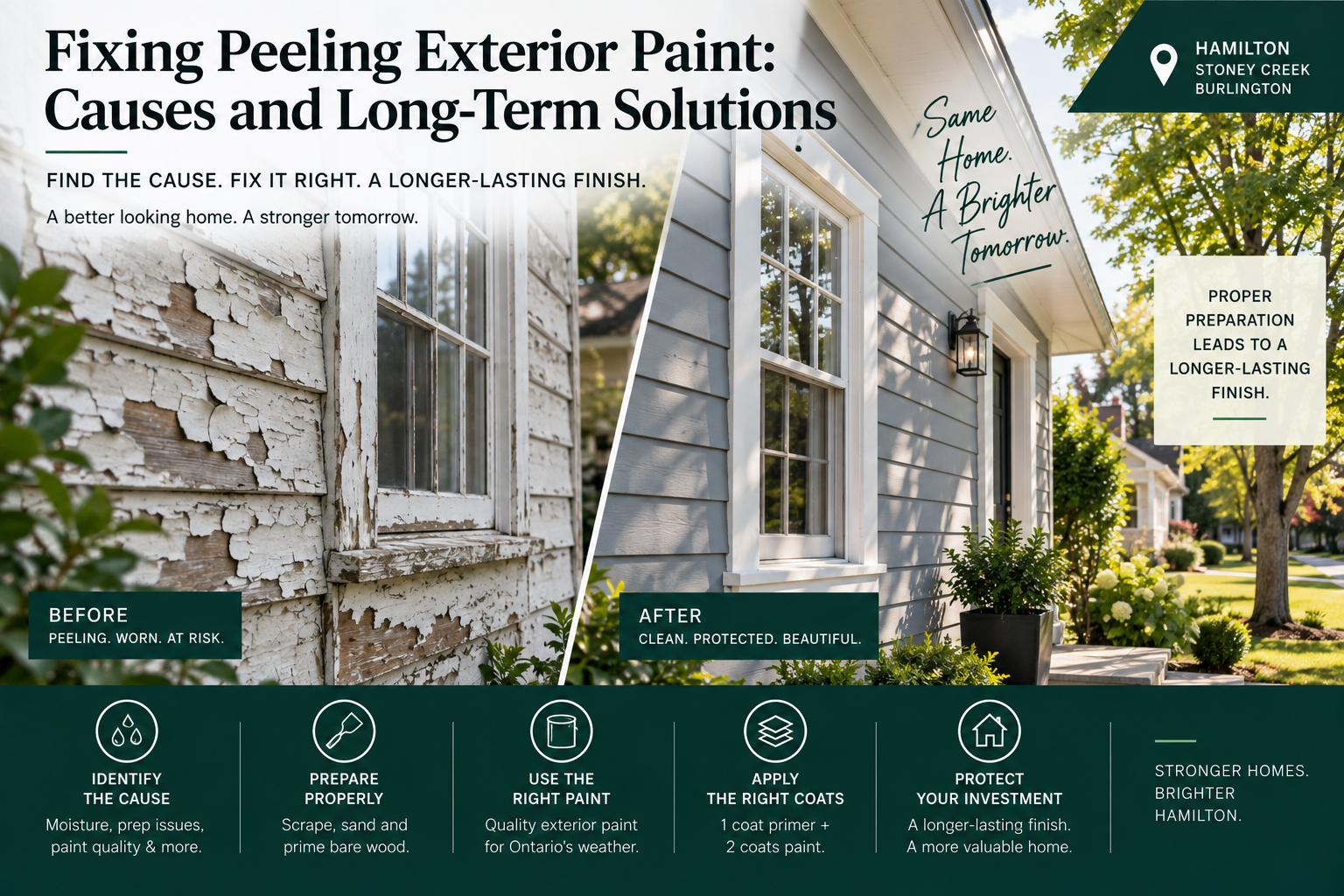
Peeling paint on a home’s exterior is one of those problems that looks purely cosmetic from the curb but almost always points to something underneath the surface. Sometimes that something is as simple as a paint job that skipped proper prep work years ago. Other times it’s a genuine moisture problem working its way out from behind the siding or trim. Either way, repainting over peeling paint without addressing the actual cause is a fast track to watching the same problem reappear within a season or two. This guide covers why exterior paint peels, how to fix it properly, and what a repaint actually needs to hold up through Hamilton’s weather.
Why Does Paint Peel on Exterior Walls?
Moisture Trapped Behind the Paint
This is the most common cause, and often the least obvious. Water vapor from inside the home, or moisture that’s found its way behind siding or trim from a roofing or flashing issue, needs somewhere to go. If it can’t escape through the wall assembly, it pushes outward against the paint film from behind, causing it to bubble and eventually peel. Peeling that’s concentrated in one specific area, rather than spread evenly across an entire wall, is a strong sign of a localized moisture source, like a leaking gutter, damaged flashing, or a missing vapor barrier, rather than a simple paint failure.
Poor Surface Preparation on the Original Job
Paint doesn’t adhere well to a dirty, chalky, or unsanded surface, and a paint job applied over inadequately prepared wood or siding often starts failing within a couple of years, well short of the 7 to 10 years a properly prepared exterior paint job should last. This is one of the most common reasons a relatively recent paint job is already peeling.
Incompatible or Low-Quality Paint
Using an interior-grade paint outdoors, or a low-quality exterior paint without enough flexibility to handle Ontario’s temperature swings between summer heat and winter cold, leads to premature cracking and peeling regardless of how well the surface was prepared.
Painting Over an Already-Failing Coat
Applying fresh paint directly over old paint that’s already peeling or alligatoring, rather than removing the failing layer first, essentially guarantees the new coat will fail in the same spots within a short time, since it has nothing solid to bond to.
How to Fix Peeling Paint Before Repainting
Identify and Address the Root Cause First
Before any scraping or sanding begins, it’s worth determining whether the peeling is a surface-level prep issue or a sign of an active moisture problem. If water is genuinely getting behind the siding or trim, that source needs to be fixed, whether it’s a gutter, a flashing detail, or a ventilation issue, before repainting, or the new paint job will fail again regardless of how well it’s applied.
Scrape and Sand Down to a Sound Surface
All loose, peeling, and flaking paint needs to be scraped away completely, followed by sanding to feather the edges between bare wood and remaining sound paint, creating a smooth, even surface for the new coat to adhere to.
Prime Bare Wood
Any area sanded down to bare wood needs a proper exterior primer before topcoat paint goes on. Skipping primer on bare wood is one of the most common shortcuts that leads to early peeling in exactly the same spots that were just repaired.
Apply the Correct Number of Coats
A properly primed exterior generally needs two coats of a quality exterior paint to achieve full, even coverage and the durability that paint manufacturers rate their products for. A single coat, even over a well-prepared surface, tends to wear unevenly and fail sooner than a two-coat application.
How Many Coats of Paint Does an Exterior Need?
Most exterior painting projects need one coat of primer over any bare or repaired wood, followed by two full coats of exterior paint. Skipping the second coat to save time or material cost is a common corner-cutting mistake that shows up as thin, uneven coverage and noticeably shorter paint life, sometimes failing in as little as 2 to 3 years instead of the 7 to 10 years a properly applied two-coat job should last.
Exterior Painting Before Selling: Is It Worth It?
Exterior house painting before selling a home is one of the higher-return cosmetic investments available, since curb appeal has an outsized effect on a buyer’s first impression before they’ve even walked through the front door. Peeling paint, in particular, can read to a potential buyer as a sign of deferred maintenance throughout the home, even when the rest of the property is in excellent condition. A fresh, properly applied exterior paint job, done well before listing rather than rushed the week before, tends to pay for itself many times over in how a home is perceived on the market.
Signs Your Peeling Paint Points to a Bigger Problem
- Peeling that’s concentrated near a specific window, roofline, or gutter, rather than spread evenly.
- Soft or spongy wood underneath the peeling paint, which indicates rot has already started.
- A musty smell near the peeling area, which can point to moisture trapped in the wall assembly behind it.
- Peeling paint on an interior wall that shares a location with exterior peeling on the same wall, which strongly suggests moisture is moving through the entire wall assembly.
Any of these signs are worth having assessed before simply repainting, since a fresh coat of paint won’t resolve an underlying moisture or rot issue, and in some cases can mask a problem that’s actively getting worse behind the new paint.
FAQ
Why does paint peel on exterior walls? Exterior paint most commonly peels due to moisture trapped behind the paint film, poor surface preparation on the original paint job, low-quality or incompatible paint, or applying new paint over an already-failing previous coat. Peeling concentrated in one specific area often points to an active moisture source rather than simple paint aging.
How do I fix peeling paint before repainting? Fixing peeling paint starts with identifying whether there’s an underlying moisture problem, then fully scraping and sanding away all loose paint down to a sound surface, priming any bare wood, and applying two full coats of quality exterior paint. Painting over peeling paint without this preparation will cause the new coat to fail quickly.
How many coats of paint does an exterior need? A properly done exterior paint job typically needs one coat of primer on bare or repaired wood, followed by two full coats of exterior paint. Skipping the second coat leads to thinner, less durable coverage that tends to fail years earlier than a proper two-coat application.
Is it worth repainting a home’s exterior before selling? Yes, in most cases. Exterior paint has a significant effect on a buyer’s first impression, and peeling paint specifically can suggest deferred maintenance throughout the home. A fresh, properly applied exterior paint job before listing is one of the higher-return improvements available to a home seller.
Dealing with peeling exterior paint on your Hamilton, Stoney Creek, or Burlington home? RWF Custom Contracting diagnoses the actual cause before repainting, so the fix actually lasts. Call 647-703-3528 for a free quote, or request your free estimate at rwfcustomcontracting.com/contact-us.