
Table of Contents
- Why Dust Control Matters During Renovation
- How to Control Dust During Renovation
- How to Protect Furniture During Renovation
- Daily Cleaning Checklist During Renovation
- How to Clean Construction Dust Safely
- Managing Air Quality and Health During Work
- What Your Contractor Should Handle Daily
- Keeping Your Home Livable: Room-by-Room Strategy
- Frequently Asked Questions
Last Updated: October 4, 2026
Why Dust Control Matters During Renovation
Construction dust spreads through your home, affecting air quality and health for weeks after work ends. Fine particles settle on surfaces, penetrate fabrics, and aggravate respiratory issues, especially for children and older adults.
The key to a livable home during renovation is containment. When you control dust at the source, you reduce cleanup time and protect your family’s comfort.
Dust control starts before the first tool arrives. This guide walks you through how to keep home clean during renovation using proven strategies.
How to Control Dust During Renovation
Controlling dust during renovation means creating physical barriers between the work area and the rest of your home to prevent particles from spreading.
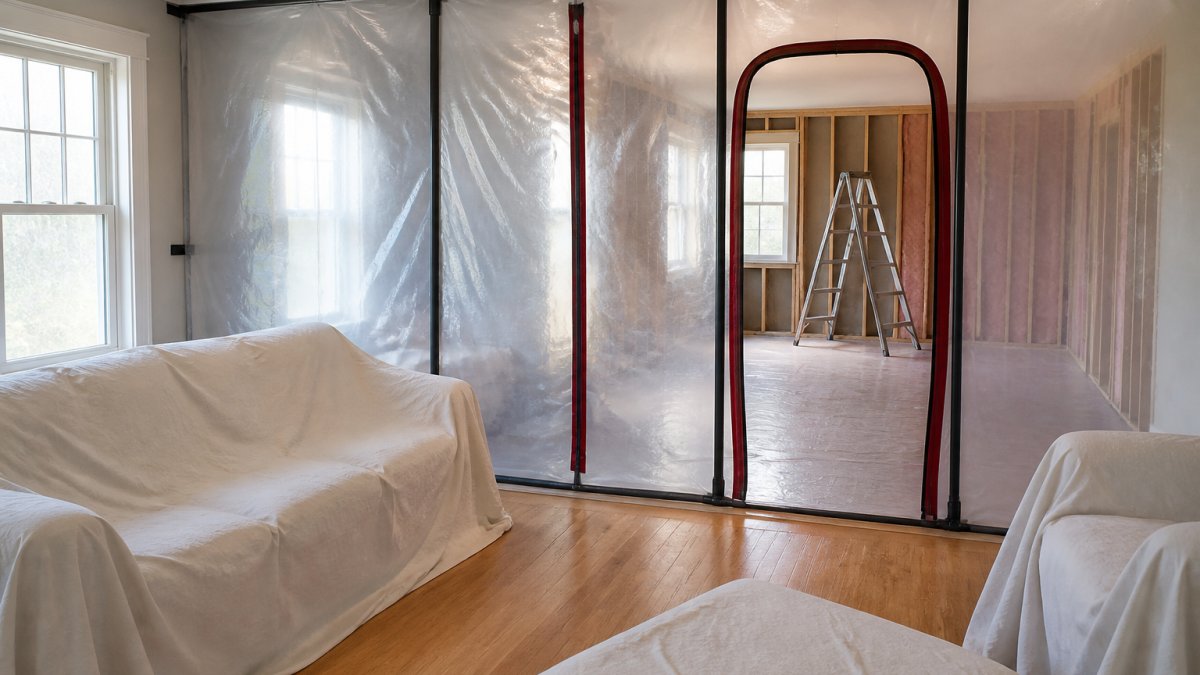
Set up plastic sheeting and zip walls
Plastic sheeting is your first line of defense. Cover doorways, hallways, and open passages with heavy-duty plastic (at least 6 mil thickness) and seal seams with painter’s tape. Zip walls are temporary frame systems with plastic panels that create airtight barriers faster and more effectively than plastic sheeting alone.
Key steps:
- Install plastic sheeting on all doorways leading from the work area
- Use painter’s tape to seal every seam and edge
- Install zip walls around the primary renovation space
- Leave one clear pathway for workers to enter and exit
- Keep barriers in place until final cleanup is complete
Seal doors and manage air flow
Keep all doors to the work area shut during construction to prevent dust from drifting into adjacent rooms. Open windows in non-work areas to dilute dust particles; never open windows in the work zone.
Practical tips:
- Close all interior doors to the work area during work hours
- Open windows in living spaces away from construction
- Keep basement or bathroom doors sealed if work is happening there
- Brief workers daily on keeping doors closed between tasks
Protect your HVAC system
Your HVAC system can spread dust throughout the home if left unprotected. Shut it down during demolition and heavy dust-generating work. If you must keep it running, upgrade to a HEPA filter and change it every 2-4 weeks instead of the standard 3 months.
How to Protect Furniture During Renovation
Moving furniture out of the work area is ideal. If that’s not possible, cover everything thoroughly.
Move items before work begins
Remove furniture, décor, and personal items from the renovation space before work starts. This eliminates the need to protect items and gives workers clear access.
For items you must keep in the work area, move them to the center of the room and cover them completely. Don’t leave anything exposed to dust and debris.
Cover what you cannot move
Wrap items completely with plastic sheeting and seal edges with painter’s tape to prevent dust from settling underneath. Use multiple layers for valuable pieces.
Daily Cleaning Checklist During Renovation
Daily cleanup keeps dust from accumulating and makes the final cleanup manageable. Establish a routine and stick to it.
Morning routine before work starts
Start each day with a quick sweep and wipe of surfaces in adjacent rooms. This removes dust that settled overnight and prevents it from spreading further.
End-of-day cleanup and debris removal
The crew should clean up their work area before leaving each day: remove debris, sweep thoroughly, wipe tools, seal barriers, and empty trash.
How to Clean Construction Dust Safely
Construction dust requires different cleanup than household dust. Dry sweeping and standard vacuums spread fine particles into the air. Safe cleanup means capturing dust at the source.
Why standard cleaning methods fail
Dry sweeping agitates particles and sends them airborne; they resettle within minutes. Standard vacuums recirculate fine dust back into the room. Construction dust particles (often smaller than 2.5 micrometers) lodge in lungs and trigger respiratory irritation, especially in children, older adults, and people with asthma.
Wet cleaning: The foundation of safe dust removal
Wet cleaning traps dust particles so they cannot become airborne. Use a damp microfiber cloth on surfaces and furniture, microfiber electrostatically attracts fine particles better than cotton. Wipe high-touch surfaces (light switches, door handles, remotes, countertops) daily.
Use a damp mop instead of a dry broom for hard floors. For carpets, use a HEPA-filter vacuum. Avoid steam cleaning or wet mopping during active renovation, moisture can damage materials.
HEPA vacuuming for carpets and fine dust
A HEPA-filter vacuum is essential for carpeted areas. Look for: a true HEPA filter (99.97% capture), a sealed system, strong suction, and washable or replaceable filters. Options include shop vacuums with HEPA kits ($150-$400), dedicated HEPA vacuums ($300-$800), or rentals ($30-$60/day).
Vacuuming technique:
Vacuum slowly to allow the filter time to capture particles. Fast passes miss fine dust. Empty the vacuum canister frequently, a full canister reduces suction and allows dust to escape. Wear an N95 mask when emptying the canister to avoid inhaling settled dust.
Daily cleanup sequence: The safe order
Follow this sequence to avoid spreading dust during cleanup:
-
Stop work and let dust settle (30-60 minutes): After the crew finishes, allow airborne particles to settle on surfaces before you begin cleanup. This prevents you from agitating dust back into the air.
-
Wipe surfaces in the work zone (damp cloth): Wipe down work surfaces, tools, and any furniture or items that remained in the space. This captures dust before it spreads.
-
Vacuum the work zone (HEPA vacuum): Vacuum floors, carpets, and low surfaces in the work area. Use slow, overlapping passes.
-
Wipe barriers and transition zones (damp cloth): Wipe plastic sheeting, door frames, and the entryway mat where workers pass. These areas accumulate dust and can transfer it to adjacent rooms.
-
Wipe adjacent rooms (damp cloth): Wipe surfaces in hallways, kitchens, and living areas near the work zone. Focus on high-touch surfaces and visible dust.
-
Run air purifiers (2-3 hours): After wet cleaning and vacuuming, run HEPA air purifiers to capture any remaining airborne particles. This is especially important before bedtime.
When to call professional cleanup
For major renovations or if dust has spread extensively, professional cleanup may be worth the cost. Professional cleaners use industrial HEPA vacuums, air scrubbers, and duct cleaning equipment that exceed residential tools.
Consider professional cleanup if:
- Dust has settled throughout the home despite containment efforts
- Anyone in the household has respiratory conditions or is immunocompromised
- The renovation lasted more than 4-6 weeks
- Demolition included asbestos-containing materials (popcorn ceilings, old insulation) or lead paint, in these cases, professional remediation is often required by law
- You want a final deep clean before moving back into the space
Professional cleanup typically costs $500-$2,000 depending on home size and dust severity. This is often less expensive than extended health issues or repeated DIY cleanup attempts.
Air filtration during and after cleanup
Run a HEPA air purifier continuously during the renovation and for 2-3 hours after daily cleanup. Portable HEPA air purifiers (with true HEPA filters, not ionizers or ozone generators) capture airborne particles that settle on surfaces.
Place the purifier in your main living area or bedroom. For larger homes (over 2,000 square feet), consider a second purifier in a secondary zone.
Change purifier filters according to manufacturer guidelines, typically every 3-6 months during renovation, more frequently if the filter visibly clogs.
Avoid ionizers and ozone generators. These devices produce ions or ozone to neutralize particles, but they do not capture dust, they only move it. Ozone is a respiratory irritant and can worsen asthma and other conditions. Stick to HEPA filtration.
Safe cleanup checklist:
- Never dry sweep or use a standard vacuum during renovation
- Wipe surfaces daily with a damp microfiber cloth
- Use a damp mop for hard floors
- Vacuum carpets with a HEPA-filter vacuum weekly or after heavy dust work
- Follow the daily cleanup sequence: settle, wipe, vacuum, purify
- Run HEPA air purifiers for 2-3 hours after cleanup and overnight
- Wear an N95 mask when emptying vacuum canisters
- Consider professional cleanup for major renovations or if dust spreads extensively
Managing Air Quality and Health During Work
Construction dust contains particles that irritate airways and lungs. Vulnerable household members, children, elderly residents, and anyone with asthma or respiratory conditions, need extra protection.
Create a clean zone in your home where family members can retreat. This might be a bedroom, den, or another room far from the work area with sealed doors and windows.
Health protection measures:
- Keep vulnerable family members in a sealed, clean room during heavy dust work
- Use air purifiers in sleeping areas
- Ensure good ventilation in non-work spaces
- Have family members wear masks (N95 or better) if they must enter the work zone
- Maintain consistent air quality monitoring
- Consider temporary relocation if anyone has severe respiratory conditions
What Your Contractor Should Handle Daily
Your contractor bears responsibility for site cleanliness during the project. Clear expectations prevent disputes and keep your home livable.
A professional contractor should:
- Seal the work area with plastic sheeting before starting
- Install zip walls or temporary barriers on day one
- Sweep and remove debris at the end of each work day
- Wipe down surfaces in adjacent areas if dust spreads
- Keep the work zone organized and safe
- Respect closed doors and sealed barriers
- Communicate about dust issues if they arise
- Coordinate cleanup timing with your schedule
RWF Custom Contracting treats daily site cleanliness as a core responsibility. Their single-team approach means the same crew manages the work area from start to finish, maintaining consistent standards and minimizing disruption to your home.
Keeping Your Home Livable: Room-by-Room Strategy
A room-by-room containment plan keeps specific areas of your home clean and functional during the project.
Kitchen: If the kitchen isn’t the work zone, keep it sealed off completely.
Bathrooms: Seal bathroom doors if the bathroom isn’t being renovated.
Bedrooms: Bedrooms should remain clean sanctuaries. Keep doors closed. Run air purifiers during sleep hours.
Living areas: These spaces become your family’s main zone. Place air purifiers here.
Hallways and entryways: These are transition zones.
Room-by-room checklist:
- Seal non-work rooms with closed doors
- Use air purifiers in main living spaces
- Wipe high-touch surfaces daily
- Change bedding weekly
- Vacuum with HEPA filter weekly
- Keep windows open in non-work areas
Keeping your home clean during renovation is entirely manageable with the right strategy.
Frequently Asked Questions
How do you keep dust down when renovating?
Use plastic sheeting and zip walls to seal the work area, close interior doors, and maintain negative air pressure with fans directed outside. Run an air purifier with HEPA filtration in adjacent living spaces, vacuum daily with a HEPA-filter vacuum, and wipe surfaces with damp cloths rather than dry dusting. Protect your HVAC system by sealing vents in the work zone and changing air filters more frequently during the project. These steps combined reduce dust spread to other parts of your home significantly.
What should you clean daily during a home renovation?
Each morning, sweep and vacuum the work area before crews arrive. At day’s end, remove all debris and building materials from the site, wipe down surfaces in adjacent rooms with damp cloths, vacuum pathways between the work zone and living areas, and empty trash daily. Wipe door handles, light switches, and baseboards in high-traffic zones. This daily cleaning checklist during renovation prevents dust from settling throughout your home and keeps living spaces safe and sanitary while work continues.
How do you protect furniture and belongings during construction?
Move furniture and personal items out of the renovation zone entirely if possible, or relocate them to sealed-off rooms away from the work area. For items that must stay nearby, cover them with plastic sheeting or furniture covers before dust and debris settle. Keep doors to other rooms closed to minimize dust migration. Store valuables and fragile items in a separate, sealed room. Communicate with your contractor about which areas are off-limits and establish clear pathways for tools and materials to prevent accidental damage.
What is the best way to clean renovation dust?
Avoid dry sweeping, which stirs dust into the air. Instead, use a HEPA-filter vacuum on hard floors and carpets, then wipe surfaces with damp microfiber cloths or mop with a damp mop. For construction dust on walls and ceilings, use a damp cloth or sponge. Run air purifiers during and after cleaning to capture airborne particles. If dust is heavy, wear an N95 or P100 mask while cleaning. After renovation, perform a final deep clean with a professional vacuum and damp-wipe all surfaces to remove settled dust completely.