
Table of Contents
- Walk-In Shower vs Bathtub for Resale Value: The Core Trade-Off
- Do Buyers Prefer a Tub or Shower? What the Data Says
- Walk-In Shower vs Bathtub Cost: What Drives the Price Difference
- Removing a Bathtub Before Selling: When It Helps and When It Hurts
- Bathroom Renovation Return on Investment: What You Can Expect
- How Bathroom Layout and Household Needs Shape the Decision
- Conclusion: A Practical Decision Tool for Your Bathroom
- Frequently Asked Questions
Last Updated: October 8, 2026
Walk-In Shower vs Bathtub for Resale Value: The Core Trade-Off
The walk in shower vs bathtub for resale value question comes down to one principle: a walk-in shower usually adds more perceived value in a primary bathroom, while a bathtub protects resale in a home with only one full bathroom. Buyers want both, but they weight them differently depending on the household.
A walk-in shower is a shower with no tub and no raised threshold, entered directly from the bathroom floor. That open design reads as modern, accessible, and easy to clean, which is why it dominates new builds and renovation plans.
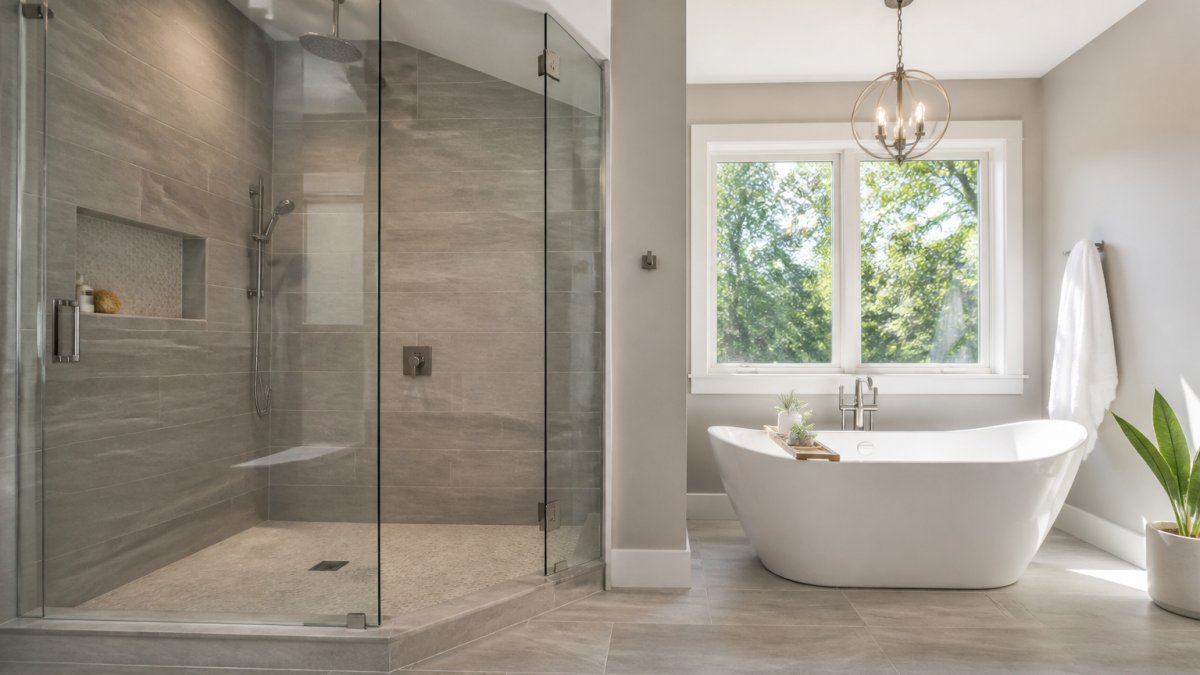
Here is the part most guides skip: the decision is not about which fixture is “better.” It is about how many bathrooms your home has, who is likely to buy it, and how long you plan to stay. Get those three answers right and the choice becomes obvious.
| Scenario | Better Resale Move | Why |
|---|---|---|
| Only full bathroom in the home | Keep a bathtub | Families with young children need at least one tub |
| Primary bathroom in a 2+ bathroom home | Walk-in shower | Buyers read it as modern and low maintenance |
| Secondary or ensuite bathroom | Walk-in shower | Frees space, suits daily use |
| Accessibility is a priority | Walk-in shower | No threshold to step over |
Do Buyers Prefer a Tub or Shower? What the Data Says
Buyer preference is not a single answer. Most real estate professionals report that families with young children and older buyers still want at least one bathtub in the home, while younger buyers and downsizers often prefer a large walk-in shower in the primary bathroom. The safest read of the market is that a home needs one tub, not two.
That distinction matters more than any single preference poll. When a home has multiple bathrooms, the primary bathroom can go full walk-in shower without hurting resale, because the hall bathroom still serves bathing needs. When a home has only one full bathroom, removing the tub narrows your buyer pool immediately.
- Families with young children: want a tub for bath time
- Older adults and caregivers: value a low-threshold shower for safety
- First-time and younger buyers: drawn to modern, low-maintenance finishes
- Downsizers: often want a shower they can age in place with
What most sellers miss is that these groups overlap. A household can want a walk-in shower for daily use and a tub for the kids. That is why a two-bathroom home with one of each is the easiest configuration to sell.
Walk-In Shower vs Bathtub Cost: What Drives the Price Difference
The walk-in shower vs bathtub cost gap is driven by waterproofing, tile work, glass, and ventilation, not by the fixtures themselves. A tub-to-shower conversion usually costs more than a straight tub replacement because the shower needs a sloped pan, a waterproof membrane, a glass enclosure, and often a relocated drain. Most guides stop at the fixture price. The real comparison is the full project cost and how each option behaves over the years you own the home.
Where the money goes on a tub-to-shower conversion:
- Demolition and disposal: removing the tub, surround, and sometimes the subfloor, then hauling it out
- Plumbing: relocating the drain to the center of the shower floor and adjusting the supply lines
- Waterproofing: a full membrane system behind the tile and a sloped pan under it
- Tile: more wall and floor area to finish than a tub surround covers
- Glass: a custom enclosure measured to the opening, which is one of the largest single line items
- Ventilation: a properly sized exhaust fan, because a fully tiled shower produces more moisture than a tub
Where the money goes on a tub replacement:
- Demolition: removing the old tub and surround
- Plumbing: the rough-in usually stays in place, which is the main cost saver
- Surround: an acrylic or tile surround goes up over the existing walls
- Faster finish: fewer trades, fewer inspection points, less time
That lower complexity is why a basic tub replacement tends to sit at the lower end of a bathroom budget, while a walk-in shower conversion sits higher. The gap is not the fixture. It is the labor and materials behind the tile.
Maintenance cost over time. A walk-in shower with a glass enclosure needs regular squeegeeing and periodic re-caulking, and grout lines need sealing. A tub surround with fewer joints is easier to keep clean. Neither is expensive to maintain, but the shower asks more of the owner, and buyers who dislike cleaning will notice.
Resale impact. A quality walk-in shower in a primary bathroom reads as an upgrade and supports the asking price. A cheap conversion, thin glass, visible seams, a curb that was not planned, reads as a shortcut and gives buyers a negotiating point. The same logic applies to a tub: a clean, well-set tub protects the buyer pool in a one-bathroom home, while a stained or dated tub drags the listing down. Cost and resale value move together only when the work is done to a standard a buyer can see.
Because pricing depends on size, layout, tile choice, and whether plumbing moves, we quote every bathroom in writing after a site visit rather than publishing a flat number.
The most expensive mistake in a tub-to-shower conversion is skipping a proper waterproofing membrane behind the tile. It saves money upfront and costs far more later, because a failed shower pan means tearing out the floor, the tile, and sometimes the ceiling below.
Removing a Bathtub Before Selling: When It Helps and When It Hurts
Removing a bathtub before selling helps when the home has more than one full bathroom and the tub sits in the primary bathroom. It hurts when you are taking the only bathtub out of the home. That single rule prevents most resale regrets.
Think about who walks through your door. A young family touring a three-bedroom home with one full bathroom and no tub will often cross it off the list. They are not being fussy. They are picturing bath time, and a shower stall does not solve it.
In a home with two or more bathrooms, the math flips. Buyers expect the primary bathroom to feel like a retreat, and a large walk-in shower delivers that. The secondary bathroom keeps the tub, the household needs stay covered, and the listing reads as updated rather than compromised.
If you are unsure which side of the line your home sits on, count the full bathrooms first. One tub in the house means keep it. Two or more means you have room to convert.
Bathroom Renovation Return on Investment: What You Can Expect
Bathroom renovation return on investment is rarely a full dollar-for-dollar recovery, and that is normal. Renovation cost versus value data published by Remodeling magazine’s Cost vs. Value report consistently shows that bathroom projects recoup a large share of their cost at resale, but not all of it.
What actually moves your return is not the fixture choice. It is whether the finished bathroom looks current, functions for the household, and passes inspection without surprises. A code-compliant renovation that matches the home’s style will outperform a flashy one that ignores the layout.
Three factors drive the return:
- Scope discipline: fixing what is dated, not rebuilding what already works
- Quality of execution: straight tile lines, sealed waterproofing, working ventilation
- Buyer fit: a layout that suits the household most likely to buy your home
Local market conditions matter too. In a slower market, buyers inspect harder and negotiate on flaws, so a well-built bathroom holds its value better than a cosmetic patch job.
How Bathroom Layout and Household Needs Shape the Decision
Bathroom layout decides more than preference does, and household needs should drive the plan rather than trends. The most reliable way to choose is to match the fixture to the buyer most likely to purchase your home, then confirm the layout can support it.
Families with young children. A tub is non-negotiable somewhere in the home. Bath time for a toddler or infant is difficult in a shower stall, and parents touring a home with only one full bathroom will often rule it out on that fact alone.
Older adults and households planning to age in place. A low-threshold or curbless walk-in shower is the safer daily choice.
Buyers with mobility needs or caregivers. Think beyond the entry. A shower needs a seat, a handheld sprayer on a slide bar, and clearance for a caregiver or a shower chair.
Luxury and low-maintenance buyers. This segment wants a large walk-in shower with a glass enclosure, quality tile, good lighting, and strong ventilation. They read a dated tub-and-surround combo as a project, not a feature.
Renters and basement suites. A durable, easy-to-clean walk-in shower suits rental use better than a tub. If you may legalize a basement suite later, plan the shower now so you are not renovating the same room twice.
Layout constraints decide what is even possible.
Accessibility is where a walk-in shower pulls ahead, but only when it is built correctly. A curbless entry, a linear drain, and a properly sloped floor make daily use safer for anyone with mobility concerns.
If you might convert a basement into a legal suite later, plan the bathroom with a walk-in shower now. It suits rental use, cleans easily, and avoids a second renovation when you add the unit.
At RWF Custom Contracting, we handle demolition through final coat, which means the layout, waterproofing, and finish decisions stay coordinated.
Conclusion: A Practical Decision Tool for Your Bathroom
Use this sequence before you commit. Count your full bathrooms. If there is only one, keep the bathtub and upgrade the surround instead. If there are two or more, convert the primary bathroom to a walk-in shower and leave the tub in the secondary bathroom. If accessibility, a future rental suite, or a small footprint is in play, lean toward the walk-in shower.
The wrong way to decide is by trend alone. The right way is by household need, layout, and how your home will read to the buyers most likely to want it.
Choosing between a walk-in shower and a bathtub is really a question about your home, your buyers, and your budget, and getting it right takes a contractor who plans the whole project instead of guessing at fixtures. RWF Custom Contracting manages every phase with a single team, from demolition to final coat, backed by transparent written quoting, code-compliant craftsmanship, and daily site cleanup that keeps your home livable during the work. Get a quote from RWF Custom Contracting and renovate with a plan that protects your resale value.
Frequently Asked Questions
Is it better to have a tub or shower for resale value?
There is no universal winner. Homes with only one full bathroom generally benefit from keeping a bathtub, because families with young children often prioritize it. Homes with multiple bathrooms can usually add a walk-in shower in the primary bathroom without hurting resale value. The right choice depends on your bathroom count, layout, and the buyer profile in your area. A local contractor can help you weigh these factors against your goals.
Will removing my only bathtub affect resale value?
Removing the only bathtub in a home can narrow your buyer pool. Many families with young children want at least one tub for bathing kids, and some buyers see a tub as essential for resale. If your home has two or more full bathrooms, removing a tub from one is usually less risky. Before you remove a bathtub before selling, consider how your home compares to similar properties in your neighbourhood.
Does a walk-in shower add value to a house?
A well-designed walk-in shower can add value, especially for buyers who prioritize accessibility, low maintenance, and modern design. It may appeal to older adults, busy professionals, and buyers without young children. However, the return on investment depends on your local market and the rest of your bathroom. In homes with only one bathroom, a walk-in shower may not offset the loss of a bathtub for family buyers.
Is it cheaper to install a bathtub or a walk-in shower?
Costs vary based on materials, layout changes, and labour. A simple bathtub replacement is often less expensive than a custom walk-in shower, which may require waterproofing, tile work, and a glass enclosure. However, a walk-in shower can be more cost-effective if you are already renovating and want to improve accessibility. For an accurate walk-in shower vs bathtub cost comparison, request a written quote from a licensed contractor.