
Last Updated: October 28, 2026
Quick Summary
A small bathroom remodel usually takes three to six weeks from first demolition to final cleanup. Cosmetic updates fall at the faster end, while full gut renovations that move plumbing or add waterproofing run longer. Scope, material lead times and inspections drive the total.
- Demolition in a small bathroom usually takes two to four days.
- Plumbing and electrical rough-in often takes three to five days in a small bathroom.
- Tile setting takes two to four days for a small floor and shower.
- Allow a 3 to 5 day buffer, especially at inspection and waterproofing stages.
- Order long-lead items like glass enclosures and custom vanities before demolition.
Table of Contents
- How Long a Small Bathroom Remodel Typically Takes
- Planning and Design Before the Work Starts
- Pre-Construction Preparation and Demolition
- Bathroom Renovation Stages: Rough-In, Tile, and Fixtures
- Sample Day-by-Day Timeline With Buffer Days
- Common Bathroom Renovation Delays and How to Prevent Them
- Booking Your Small Bathroom Remodel With RWF Custom Contracting
- Frequently Asked Questions
How Long a Small Bathroom Remodel Typically Takes
A small bathroom remodel usually takes between three and six weeks from first demolition to final cleanup. That range covers a cosmetic update with a new vanity, tub surround and fixtures. A full gut renovation that moves plumbing or adds waterproofing runs longer. Homeowners can use the project scope to help set expectations before work starts.
Small spaces change the math. Fewer square feet means fewer trades can work at once, so every phase has to finish before the next one starts. If you are deciding on layout, see how a walk-in shower compares to a bathtub for resale value. One missed delivery or failed inspection can push the whole schedule back by a week.
Here is what drives the timeline:
- Scope of work: Surface updates move fast. Layout changes and new plumbing take longer.
- Access: If this is your only bathroom, the work must be scheduled around your daily routine.
- Material lead times: Custom tile, glass enclosures and special vanities can take weeks to arrive.
- Inspections: Plumbing and electrical rough-in usually need sign-off before walls close up.
Planning and Design Before the Work Starts
Planning is where most of the timeline is decided. Design choices made in the first two weeks affect how long construction takes later.
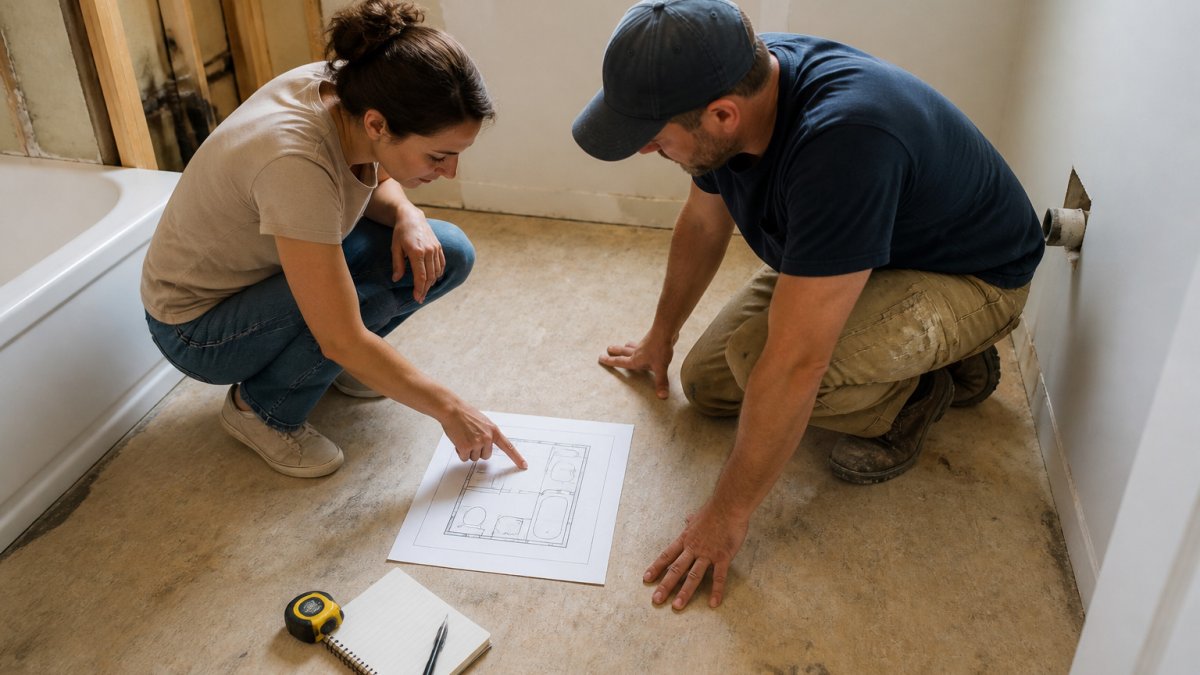
Start with a clear list of what must change. Moving a toilet or shower drain is far more involved than swapping a faucet. Once the scope is set, the design decisions follow:
- Confirm the layout and fixture locations.
- Choose tile, vanity, shower and lighting selections.
- Order any items with long lead times right away.
- Get a written quote that lists the scope and schedule.
A common mistake is choosing finishes before measuring the room. Measure twice, then order. Waiting on a special-size glass door can stall the job for weeks.
Pre-Construction Preparation and Demolition
Before demolition, protect the rest of the home. Use this renovation preparation guide to set up a budget, schedule, permits and home protection plan so the work does not stall. Cover floors, seal the doorway and plan where dust will go. Remove personal items from the room and turn off water and power to the area.
Demolition in a small bathroom usually takes two to four days. It depends on how much tile, drywall and old fixtures come out. Hidden damage, such as rot behind the tub or water-stained subfloor, often shows up at this stage and can add time. Plan for it. A buffer of a few days keeps the rest of the schedule intact.
Bathroom Renovation Stages: Rough-In, Tile, and Fixtures
Each stage depends on the one before it. Skipping ahead causes rework.
Plumbing and Electrical Rough-In
Rough-in is the hidden work: new supply lines, drains, vent pipes and electrical wiring. In a small bathroom this often takes three to five days. Inspection comes next. Walls should stay open until the inspector signs off.
Tile Installation and Curing Time
Tile starts after waterproofing and backer board are in place. Setting tile takes two to four days for a small floor and shower. Grout and sealant need time to cure before heavy use. Most manufacturers recommend waiting at least 24 to 72 hours before foot traffic, and longer before the shower gets regular use. Check the product specifications for your materials.
Fixture and vanity installation follows tile, usually taking two to three days. Final plumbing hookups, lighting, mirrors and accessories finish the job.
Sample Day-by-Day Timeline With Buffer Days
A small bathroom compresses the work area, not the sequence. Because there is rarely room for two trades to work at once, the schedule is driven by dependencies: rough-in must pass inspection before insulation and backer board go up, waterproofing must cure before tile, and tile must cure before the toilet and vanity are set. The sample below is for a typical small bathroom with a new shower, vanity, floor tile and relocated fixtures. It assumes a single crew and materials on site before demolition.
| Working days | Phase | What must be true before it starts | Can run in parallel |
|---|---|---|---|
| 1-2 | Protection and demolition | Water and power isolated; dumpster or bagster on site | Order long-lead glass and vanity if not already ordered |
| 3-4 | Hidden damage check and subfloor repair | Demolition complete; framing exposed | Plumber can review drain locations while framing is open |
| 5-8 | Plumbing and electrical rough-in | Subfloor sound; layout confirmed | Electrical and plumbing can share days in a small room only if the panel and drain locations do not conflict |
| 9 | Rough-in inspection | Rough-in complete; walls still open | None, inspection is a hard stop |
| 10-11 | Insulation, backer board and waterproofing | Inspection signed off | None, waterproofing must cure undisturbed |
| 12-15 | Tile installation | Waterproofing cured per manufacturer | Glass template can be measured once tile layout is set |
| 16-17 | Grout and cure | Tile set | Vanity can be assembled off-site |
| 18-20 | Vanity, toilet, shower trim and glass | Grout cured; fixtures on site | Final electrical trim can follow vanity if lighting is vanity-mounted |
| 21-22 | Final plumbing connections, paint touch-up, lighting and cleanup | All fixtures set | None, this is the punch-list phase |
| Buffer: 3-5 days | Contingency | , | Absorbs delivery delays, failed inspection re-checks or hidden damage |
Where small spaces change the schedule. A tight room means one trade at a time, so a two-day plumbing rough-in can block the electrician from starting until the plumber clears the floor. Limited staging means materials arrive in smaller batches, which raises the risk of a missing box stopping tile work. Ventilation is another constraint: dust and solvent fumes build up quickly in a small room, so cutting and painting may need to be scheduled with the door sealed and a fan running, which can add half a day here and there.
If this is the only bathroom. The schedule above assumes the household has another toilet. If not, the sequencing has to protect access. The most common approach is to keep the toilet in service as long as possible: demolish around it, set the new floor tile and then swap the toilet in a single day once the flange and tile are ready. A second option is a temporary toilet, a rental unit or a macerating toilet connected to a utility sink drain, installed before demolition and removed at final cleanup. A third is to schedule the no-toilet window to the shortest possible block, usually the rough-in and tile days, and plan alternate facilities for that stretch. Whichever route you choose, write the no-toilet dates into the schedule before demolition begins so the household can plan around them.
Add buffer at the inspection and waterproofing stages, not at the end. Those are the two points where a failed check or a rushed cure forces the rest of the schedule to restart.
Common Bathroom Renovation Delays and How to Prevent Them
If the bathroom is the only one in the home, a delay is not just a schedule problem, it is a household problem. Confirm the no-toilet window in writing and keep a contingency plan for temporary facilities.
Preventing delays comes down to planning. A clear scope, early orders, confirmed permit requirements and a written schedule with buffer at the inspection and waterproofing stages keep the job moving.
Booking Your Small Bathroom Remodel With RWF Custom Contracting
RWF Custom Contracting provides renovation services with single-team management for all project phases. The business prioritizes transparent written quoting and daily site cleanup.
If you are planning a bathroom remodel in Hamilton, Stoney Creek, Burlington or the surrounding Golden Horseshoe, request a quote from RWF Custom Contracting. Before you reach out, use this checklist for choosing a renovation contractor to compare quotes, scheduling and permit handling.
Frequently Asked Questions
How long does it take to remodel a small bathroom?
Request a quote from RWF Custom Contracting for your project.
What are the stages of a small bathroom remodel?
Most small bathroom remodels move through planning and design, pre-construction preparation, demolition, plumbing and electrical rough-in, waterproofing and tile, fixture and vanity installation, and finishing touches with cleanup. Each stage depends on the one before it. Rough-in inspections must pass before walls close up, and tile needs time to cure before fixtures go in. Knowing this order helps you read a schedule and spot where a delay will affect the finish date.
Can you use a bathroom during a remodel?
Usually not. A small bathroom is often the only one in the home, so renovation work typically means it is out of service for the full project. A practical approach is to plan a temporary toilet and sink arrangement, or to schedule the work in a phase that keeps a working facility available for part of the project. RWF Custom Contracting keeps the site clean each day, which helps the rest of the home stay livable while the bathroom is down.
What can delay a small bathroom renovation?
The most common delays come from hidden water damage or rot found after demolition, failed rough-in inspections, late fixture or tile deliveries, and changes to the layout after construction starts. Permit and inspection scheduling can also add days. Settling every product selection and confirming delivery dates before demolition begins removes many of these delays. A written timeline with buffer days for inspections and deliveries keeps the schedule realistic from the start.
