
Renovating a Century Home in Hamilton: Challenges and Solutions
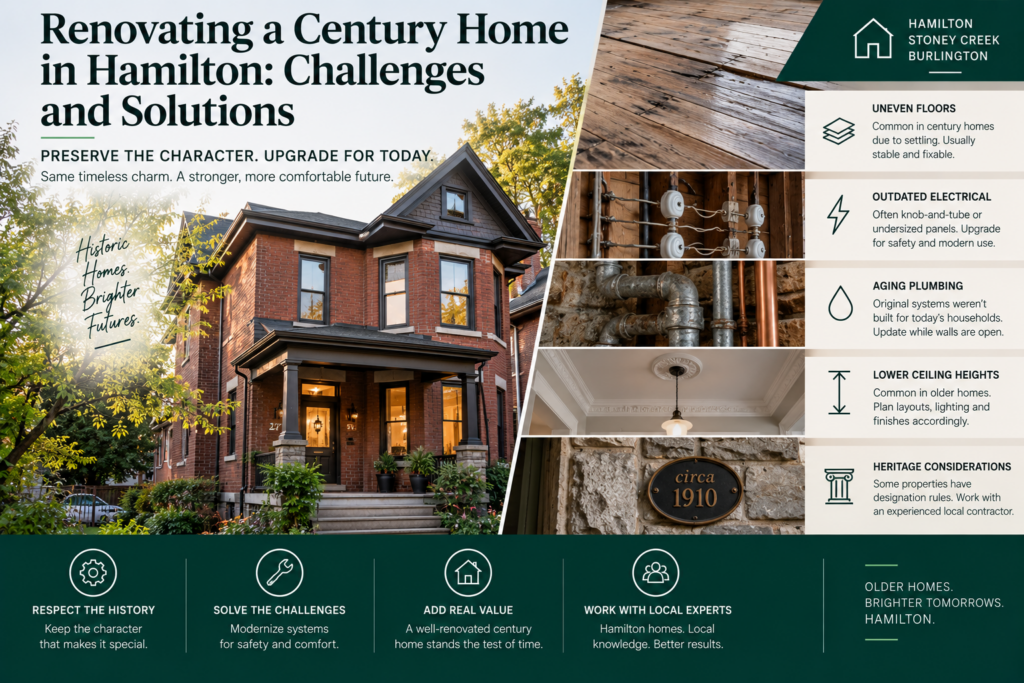
Century home renovation in Hamilton comes with a distinct set of challenges not found in newer builds, including uneven or settled flooring, outdated electrical and plumbing that needs upgrading before finish work can begin, lower ceiling heights, and, for some properties, heritage designation rules that govern what can be changed on the exterior. None of these challenges make a century home a bad renovation candidate. They just mean the project needs a contractor who has actually worked on Hamilton’s older housing stock before, not one applying a new-build playbook to a 100-year-old structure.
How to Plan a Basement Renovation Around Ontario Building Code Requirements
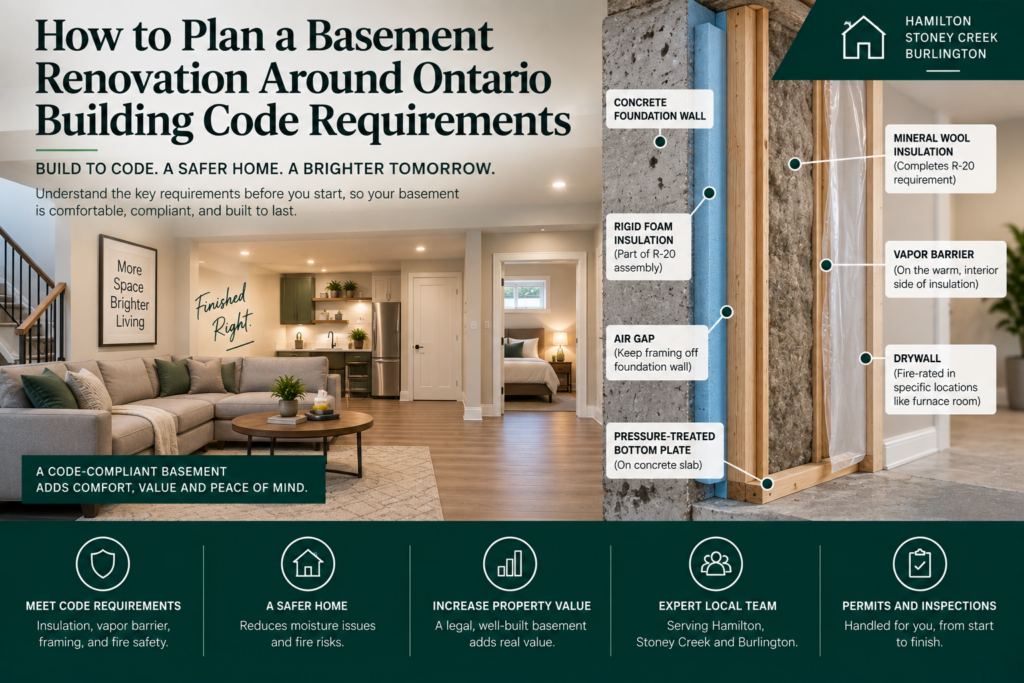
The Ontario Building Code requires basement walls in a finished basement to meet a minimum insulation R-value, generally in the range of R-20 for the wall assembly depending on the specific construction method, along with a properly installed vapor barrier, code-compliant framing that’s kept clear of the foundation wall, and drywall that meets fire-rating requirements in specific locations like around a furnace room. Meeting these requirements isn’t optional, and a building permit and inspection process confirms compliance before the basement can be considered finished space.
How Frost Affects Deck Footings and Fences in Ontario Winters

Frost affects deck footings and fence posts through a process called frost heave, where water in the surrounding soil freezes, expands, and pushes upward against anything embedded in the ground. In the Hamilton area, the frost line, the depth below which the ground doesn’t freeze, sits at approximately 4 feet. Footings and posts set above this depth are at risk of being gradually pushed upward over successive winters, leading to a deck that becomes wobbly or uneven, or a fence that starts to lean.
Fixing Peeling Exterior Paint: Causes and Long-Term Solutions

Exterior paint typically peels because of moisture trapped behind the surface, poor surface preparation before the original paint job, using a low-quality paint or the wrong type for the substrate, or applying paint over an already-failing previous coat. The long-term fix always starts with proper scraping, sanding, and priming of bare wood before any new coat goes on. Skipping this preparation step is the single most common reason a repaint fails within a year or two.
How to Soundproof Between Floors in a Legal Duplex

Soundproofing between floors in a legal duplex generally requires resilient sound channels or an independent second layer of framing to decouple the ceiling from the floor joists above, dense insulation like mineral wool within the joist cavity, and a fire-rated drywall assembly that satisfies the Ontario Building Code’s requirements for both sound attenuation and fire separation between units. These two requirements, sound and fire, are addressed by the same assembly, which is why this part of a legal duplex conversion should be planned and built together rather than treated as separate upgrades.
What to Do Before Your Kitchen Renovation Starts: A Prep Checklist

Before a kitchen renovation starts, homeowners should set up a temporary kitchen area, clear out cabinets and pack breakables, protect flooring and furniture in adjacent rooms, confirm the demolition and material delivery schedule with their contractor, and plan for pets and daily routines around several weeks of noise and dust. Most homeowners do stay in their home during a kitchen renovation, but preparing properly in advance makes the disruption far more manageable.
How to Choose the Right Flooring for a Hamilton Basement Apartment

Luxury vinyl plank is generally the best flooring choice for a Hamilton basement apartment, since it’s fully waterproof, holds up well to below-grade temperature swings, and stands up to the wear of tenant use. Porcelain tile, often paired with in-floor heating, is the strongest choice for basement bathrooms specifically. Solid hardwood should be avoided below grade entirely, since basement moisture levels will eventually damage it regardless of how well the rest of the space is waterproofed.
Why Your Deck Is Wobbly (And When It’s Time to Rebuild vs. Repair)

A wobbly deck is almost always caused by one of three things: footings that weren’t set below the frost line and have shifted, a ledger board that’s pulling away from the house, or railings that have loosened over time. Footing problems usually mean a rebuild, while a loose ledger board or railing can often be repaired if the rest of the structure is sound. The only way to know which one you’re dealing with is a physical inspection starting at the footings and working up.
Basement Flooding in Hamilton: Causes, Fixes, and When to Waterproof Before Finishing
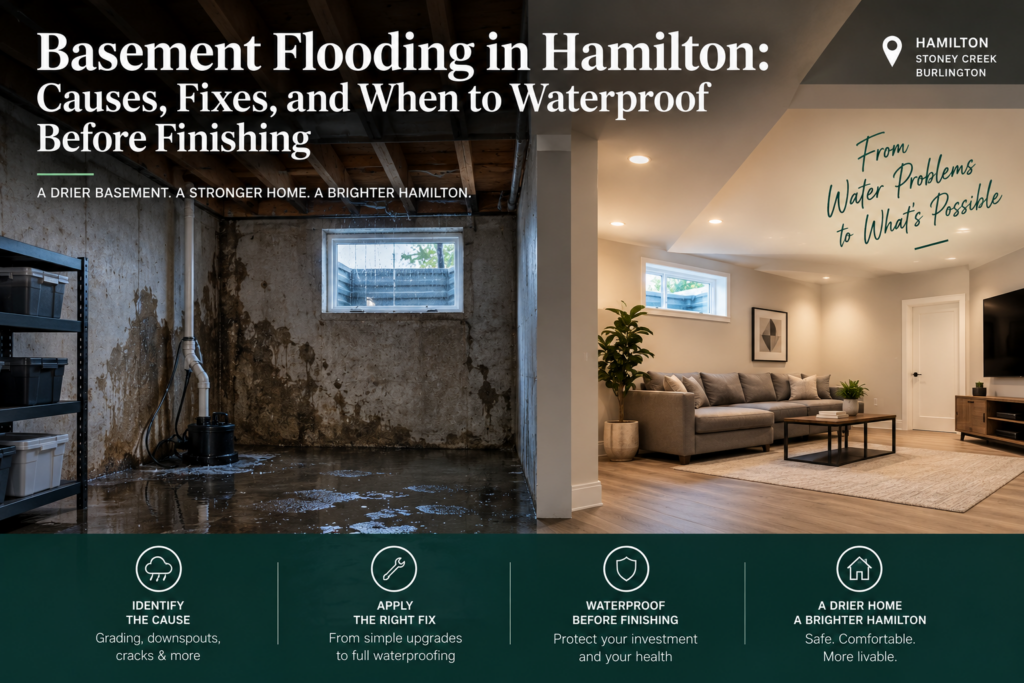
Basement flooding in Hamilton is most often caused by poor exterior grading, clogged or missing eavestroughs and downspouts, hydrostatic pressure pushing water through foundation cracks, or a failing or absent sump pump. Most cases can be resolved with a combination of exterior grading corrections, downspout extensions, foundation crack repair, and an interior drainage system paired with a sump pump. Any basement with a history of water intrusion should be fully waterproofed and confirmed dry before framing or finishing work begins, since covering a moisture problem with drywall only hides it temporarily.
How to Tell If Your Hamilton Home Is a Good Candidate for a Legal Duplex Conversion

A Hamilton home is generally a strong candidate for a legal duplex conversion if the basement has at least 1.95 metres, or about 6 feet 5 inches, of ceiling height over most of the habitable space, room for a code-compliant egress window, and a realistic path to a separate entrance. Homes built from the 1970s onward with poured concrete foundations tend to qualify most easily, though older homes with lower ceilings can often still work with additional excavation. A walkthrough with a contractor experienced in Hamilton’s Additional Residential Units bylaw is the only way to know for certain.